Enterprise pentesting for internal infrastructure, Active Directory, web servers, APIs, cloud environments, and in-house applications. Delivery is designed for CISOs and IT leadership: evidence, business impact, and prioritized remediation.
Executive view to explain scope, phases, and deliverables for the pentesting service.
Share this summary with leadership, IT, and audit teams before the scoping meeting.
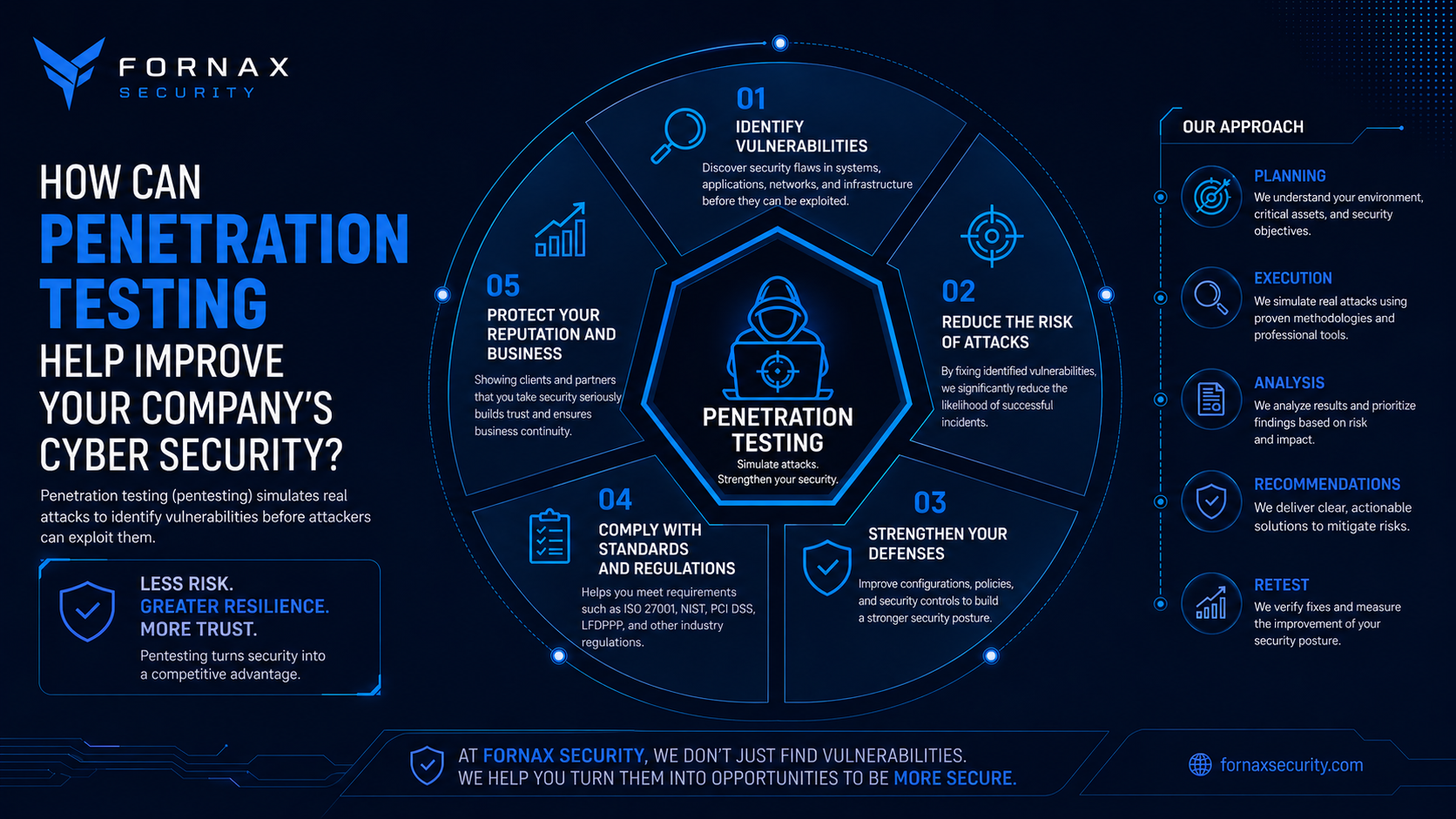
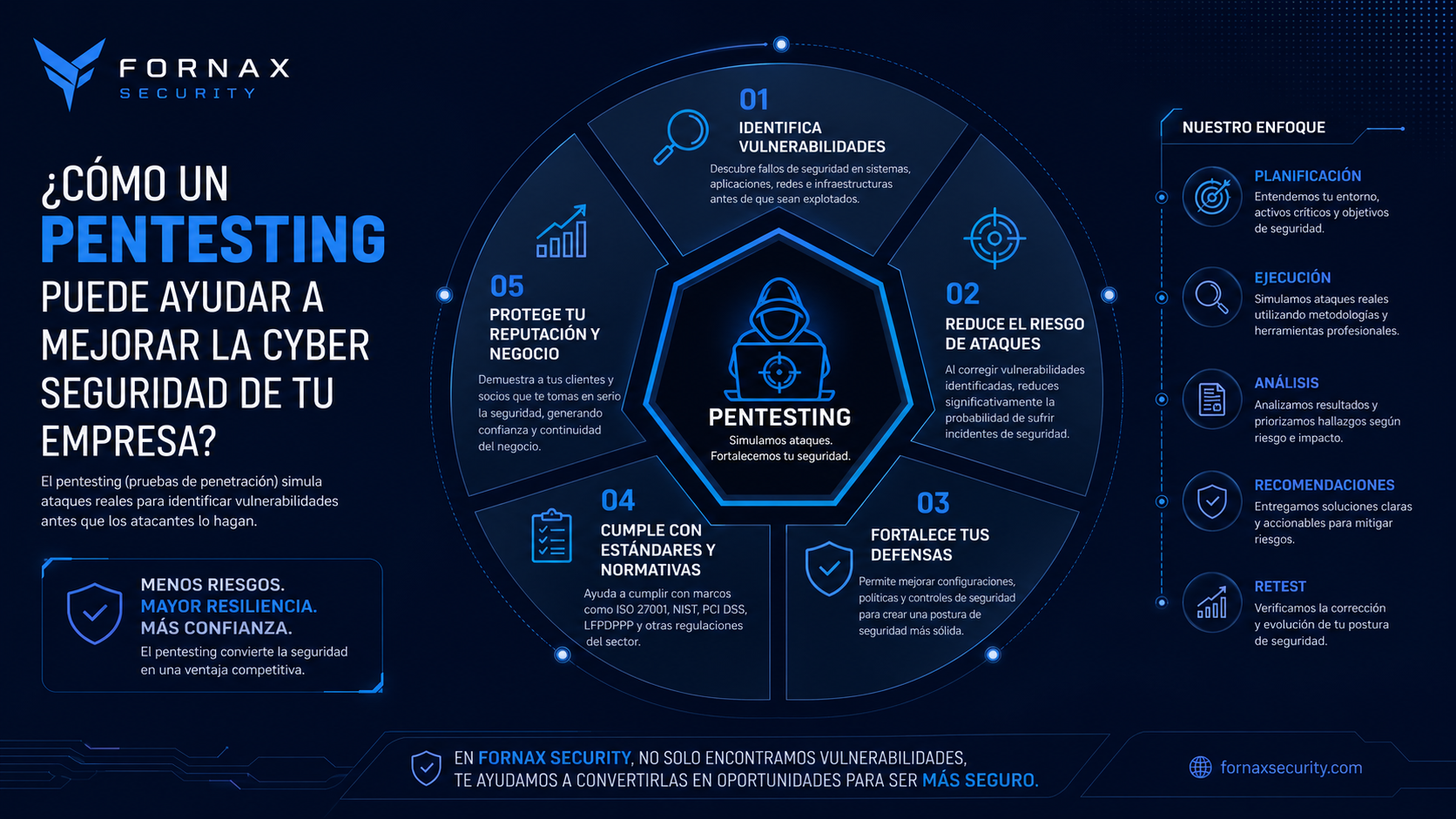
Click each domain to review scope, objectives, deliverables, and the suggested technical stack. This section is designed for the Services > Pentesting page of your web portal.
A clear process creates less operational friction and more executive value. Each phase produces useful information for decisions and remediation.
Assets, exclusions, testing windows, contingency contacts, and rules of engagement.
Network, services, domains, ports, endpoints, and observable technologies.
Users, shares, permissions, versions, authentication, and reachable surfaces.
Controlled validation of findings to demonstrate criticality and impact.
Privilege paths, lateral movement, data access, and affected business scenarios.
Executive summary, prioritized technical backlog, and remediation validation.
Reference model to show fast alternatives to CISOs and IT leadership. Pricing can be adjusted based on the confirmed scope.
This does not replace a formal quote, but it helps visitors self-segment and understand the recommended level of effort.
Answers designed to remove common objections in sales cycles with security, IT, and leadership teams.
A vulnerability assessment identifies potential exposure; pentesting validates exploitability and real impact through controlled testing. That makes the evidence more useful for prioritizing decisions.
Yes. A no-initial-privilege scenario simulates an attacker who already gained LAN presence. It can still reveal exposure paths, segmentation issues, insecure shares, and escalation vectors.
An executive summary for decision making, a detailed technical report, a prioritized remediation matrix, and, when contracted, a re-test to validate closure.
Yes. Binaries, APKs, installers, and internal web applications can be reviewed through decompilation, static and dynamic analysis, secret review, and traffic validation.